━ CORPORATE BOOT CAMP TRAINING · BENGALURU
Corporate Boot Camp Training in Bangalore
Build Discipline, Resilience & Team Capability
A structured, physical learning experience where employees develop discipline, teamwork, resilience and leadership through guided challenges, facilitation and reflection. Not a coding bootcamp.
7.8 acres
Secured Campus
43 km
From Central Bengaluru
22+ yrs
Facilitation Experience
300+
Clients Served
01 / The difference
What A Corporate Boot Camp Is (And Isn't)
A corporate boot camp uses structured physical and team-based challenges to create situations where workplace behaviours become visible.
It isn’t simply a fitness session, a recreational outing or a coding programme. The purpose is to use carefully planned challenges as a learning environment.
Participants may have to coordinate under time pressure, follow instructions, solve problems, take responsibility for a team role or adapt when an approach doesn’t work. The facilitator then connects those experiences to everyday workplace behaviours.
This makes the programme relevant for organisations looking for a more active approach to employee development.

Led by army-style facilitators
Value Lanes is built by former Armed Forces officers, so discipline and leadership aren’t just themes for the day — they shape how every challenge is briefed, run and debriefed.
What Employees Can Develop Through A Boot Camp
The activities are only one part of the experience. The larger objective is to help employees practise behaviours that matter at work.
01
Discipline And Accountability
Participants work within defined instructions, responsibilities and time limits. This creates opportunities to practise consistency, ownership and accountability.
02
Teamwork And Communication
Team challenges require employees to exchange information, coordinate actions and work towards a common objective rather than operate individually.
03
Resilience And Adaptability
Challenges can require teams to respond to setbacks, changing conditions or unsuccessful approaches. These situations encourage participants to reassess and continue working towards the objective.
04
Leadership And Decision-Making
Some activities create opportunities for employees to take initiative, allocate responsibilities, make decisions and guide the team through a challenge.
Trusted by
Our Corporate Clients
Teams from technology, banking, manufacturing and consulting organisations have run outings and outbound learning programmes at the campus.











The Value Lanes Approach To Corporate Boot Camps
Value Lanes uses an experiential learning approach where participants learn through doing, observation and reflection.
The basic structure can be understood as:
01
Brief
02
Challenge


Observation
03
Debrief
04
First, participants understand the objective and instructions. They then work through the challenge as a team. Facilitators observe how the group communicates, leads and responds to problems. The experience is followed by a debrief that helps participants connect what happened during the activity with workplace behaviour.
Corporate Boot Camp Programme Structure
The programme can be organised around the organisation’s objectives, employee profile, group size and available time.
Single-Day Programme
A single-day format works when an organisation wants a concentrated experience involving structured challenges, teamwork and facilitated reflection.
It can suit companies that want to introduce employees to experiential learning without committing to a multi-day programme.
Multi-Day Programme
A multi-day format allows more time for progressive challenges, leadership exercises and reflection.
Activities can be sequenced so that teams encounter different types of challenges rather than repeating the same format throughout the programme.
Part Of A Wider Outbound Programme
A boot camp can also be included within a broader outbound training programme when an organisation wants to combine physical challenges with leadership, teamwork and other experiential activities.
Who Can Benefit From A Corporate Boot Camp?
A structured programme can be particularly relevant for organisations with large employee groups where communication, collaboration, accountability and adaptability are important.
IT And ITES Teams
Project-based teams often need employees from different functions to coordinate effectively. Outdoor challenges can create practical situations where communication and collaboration become visible.
BPO And Customer-Service Teams
High-pressure work environments can benefit from activities that encourage teamwork, composure, adaptability and shared responsibility.
Large Corporate
Teams
For larger workforces, a structured programme can provide a common experience across teams while allowing facilitators to work with participants in smaller groups.
What To Check Before Booking A Corporate Boot Camp
Choosing a programme based only on the activities isn’t enough. HR and L&D teams should evaluate the provider on several practical factors.
Facilitator Credentials
Ask who will conduct the programme and what experience the facilitators bring. For programmes involving discipline and leadership development, relevant army style leadership and facilitation experience can be an important consideration.
Safety Protocols
Check how activities are supervised and what arrangements exist for first aid, emergencies, participant safety and site management.
Fitness-Level Accommodation
A corporate programme shouldn’t assume that every employee has the same physical ability. Ask how activities are adapted for different fitness levels and whether participation can be managed safely.
Learning And Debriefing
Ask what happens after the activities. A strong programme should provide opportunities to discuss what participants experienced and how those lessons relate to work.

Client Experience With Value Lanes
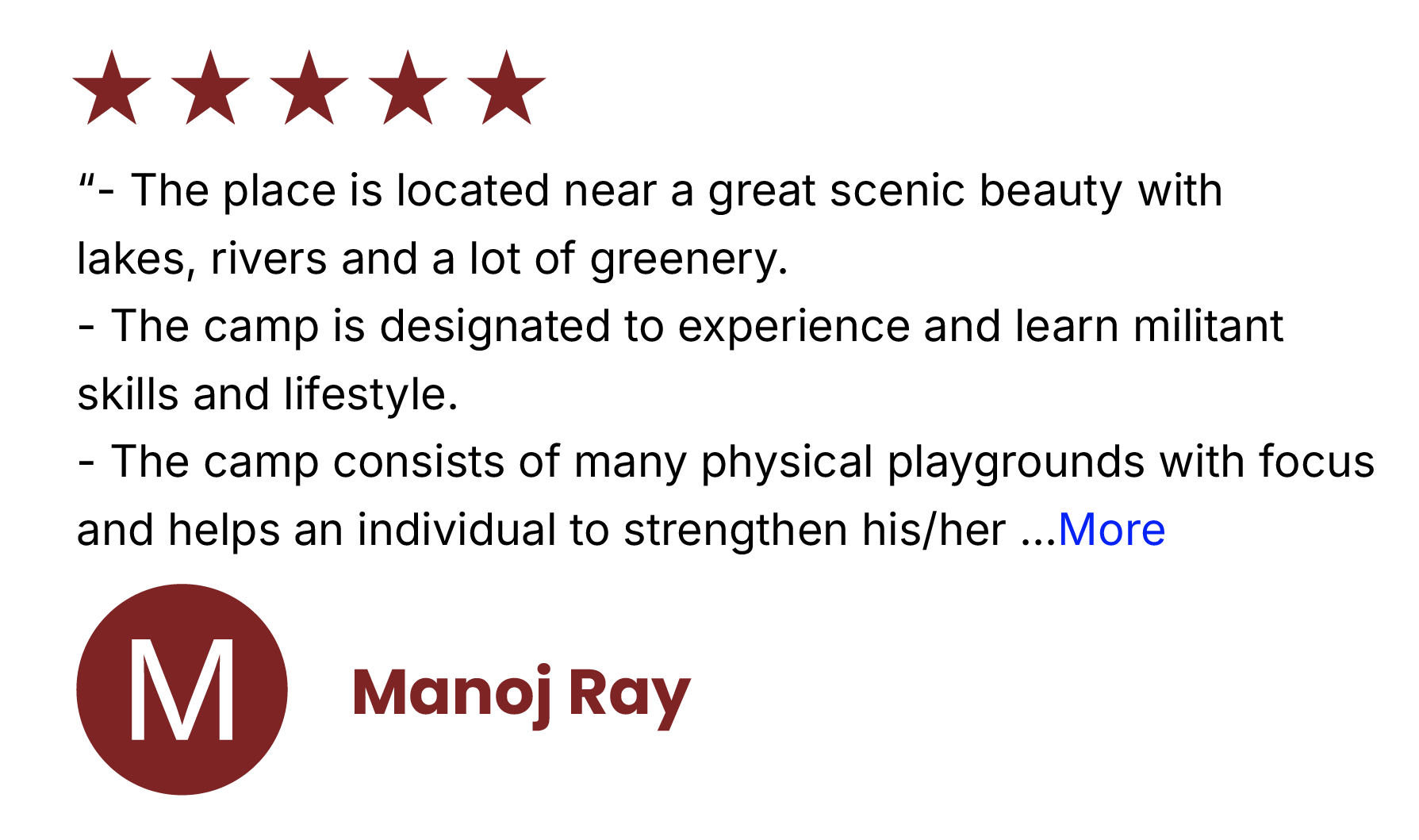
Client feedback can help HR teams understand whether the programme delivers more than an outdoor activity.
Value Lanes‘ existing client material highlights outcomes such as teamwork, collaboration, planning and execution, time management and leadership. These are useful indicators to consider when evaluating the relevance of a corporate boot camp for a workplace audience.
The emphasis should remain on the learning experience, facilitator involvement and connection between activities and workplace behaviour.
Book A Boot Camp For Your Team
The right programme should be more than a physically demanding day outdoors. It should give employees a structured environment to practise teamwork, discipline, resilience, leadership and decision-making.
Value Lanes can help organisations plan a corporate programme around their workforce, objectives and preferred duration.






Client





07 / FAQs
Frequently Asked Questions About Corporate Boot Camps
What is the purpose of a corporate boot camp?
Corporate boot camps at Value Lanes use structured physical and team challenges to practise accountability, communication and decision-making. Facilitators help participants connect their experience to workplace responsibilities. A boot camp can also form part of a broader outbound training programme.
How does the founders’ Army experience influence the approach?
Value Lanes was founded by Major Vaibhav Kapoor, CEO, and Col. Arun Dhar, Director, Operations, both former Army officers. The programme’s emphasis on discipline, clear responsibilities and coordinated action reflects this background. Explore our approach to army-style leadership development for more context.
Can the programme address a specific workplace challenge?
Yes. Corporate boot camps can be planned around organisational objectives, employee profiles and available time. Share a concrete concern, such as unclear task ownership or communication gaps. Our company team building activities page provides additional context on group challenges that focus on working together.
How can a boot camp support managers and emerging leaders?
Team challenges create opportunities to assign responsibilities, make decisions and respond when plans change. Facilitated discussions help participants examine their approach. For programmes focused on management capability, explore our leadership development training.
What should L&D teams clarify before approving a programme?
Confirm the learning objectives, programme duration, facilitator involvement and physical requirements. Ask how activities will relate to workplace situations and how reflection will be included. Discuss participation needs in advance so the proposed format is appropriate for the group.
How can managers follow through after the boot camp?
Identify practical commitments during the closing discussion, such as assigning clearer responsibilities or checking that instructions are understood. Managers can revisit these commitments in regular meetings and discuss examples of their application. Follow-through keeps the programme connected to everyday work.